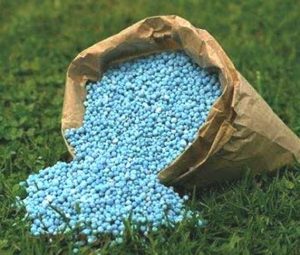
 Neem Coated Urea is a type of fertilizer in which urea is coated with Neem Seed Oil; a type of initiative which is designed to tackle black marketing of urea, and also to enhance growth of wheat and paddy in the context of Indian main land.[i] Instructions were given t companies to increase their productivity of neem coated urea up to three fourth of the total productivity.[ii]
Benefits of Neem Coated Urea*:
- It will regulate release of nitrogen from soil; making the manure available for plants for a longer time.
- It will enhance growth of plants while maintaining soil health.
- It will enhance normal growth of plants. This fertilizer will also work secondarily as an insect pest.
- Frequent application of fertilizer will be reduced considerably.
- This fertilizer is immune to volatilization, leaching and runoffs.
- It can be considered as an alternative to replace poisonous chemical pests.
Gradual shift from traditional source of urea to neem coated urea meets double purpose of the State sponsored scheme; it also accelerates the productivity in particular, enhances health of soil and protects crops from majority of pests.[iii] It repels a wide variety of insect pests and nematodes.[iv]
Use of Neem Coated Urea protects plant roots from nematodes, soil grubs and termites. It reduces alkalinity in soil; increases organic matter content of the soil; maintains soil texture. One should handle this fertilizer with care as ingestion of it may cause metabolic acidosis.[v]
Azadirachtin, a chemical present in neem seeds, acts as an insecticide; this chemical is differently used by farmers in organic farming.[vi] Use of this chemical in organic farming, specifically in Indian context, under different means of local processing, is an age old tradition; even Vedic roots of the same can be traced out.[vii] We have a long list of products, may be 15 or more in some cases, containing azadirachtin.[viii]
Another key point to be noted in this case is that risk of this chemical to bees and other friendly insects is very low.[ix] Neuroendocrine disruption, as a primary impact of this chemical in insects, reduces pupation.[x] It antagonizes both juvenile hormones and ecdysteroids[xi]. Degeneration of other neuroendocrine glands in insects is a secondary impact of this insecticide.
[i] Ramappa, K. B.; Jadhav, Vilas; Manjunatha, A. V. (31 May 2022). “A benchmark study on economic impact of Neem Coated Urea on Indian agriculture”. Scientific Reports. 12 (9082) 9082. Bibcode:2022NatSR..12.9082R. doi:10.1038/s41598-022-12708-1. PMC 9156691. PMID 35641568.
[ii] Datta, Kanika (2016-02-16). “Neem-coated truth: Urea policy isn’t a game-changer”. Business Standard India. Retrieved 2019-06-12.
[iii] Puri, H. S. (1999). Neem: The Divine Tree. Azadirachta indica. Amsterdam: Harwood Academic Publications. ISBN 978-90-5702-348-4.
[iv] Mishra, A. K; Singh, N; Sharma, V. P (1995). “Use of neem oil as a mosquito repellent in tribal villages of mandla district, madhya pradesh”. Indian Journal of Malariology. 32 (3): 99–103. PMID 8936291.
[v] Bhaskar, MV; Pramod, SJ; Jeevika, MU; Chandan, PK; Shetteppa, G (August 2010). “MR imaging findings of neem oil poisoning”. AJNR. American Journal of Neuroradiology. 31 (7): E60-1. doi:10.3174/ajnr.A2146. PMC 7965469. PMID 20448012.
[vi] Ermel, K. (1995). “Chapter 2.3 Azadirachtin content of neem seed kernels from different parts of the world”. In Schmutterer, Heinrich (ed.). The Neem Tree. Weinheim, Germany: VCH Verlagsgesellschaft mbH. pp. 89–92. ISBN 3-527-30054-6.
[vii] Kilani-Morakchi, Samira; Morakchi-Goudjil, Houda; Sifi, Karima (20 July 2021). “Azadirachtin-Based Insecticide: Overview, Risk Assessments, and Future Directions”. Frontiers in Agronomy. 3 676208. doi:10.3389/fagro.2021.676208.
[viii] Kilani-Morakchi, Samira; Morakchi-Goudjil, Houda; Sifi, Karima (20 July 2021). “Azadirachtin-Based Insecticide: Overview, Risk Assessments, and Future Directions”. Frontiers in Agronomy. 3 676208. doi:10.3389/fagro.2021.676208.
[ix] Arena, M; Auteri, D.; Barmaz, S.; Brancato, A. (15 March 2018). “Conclusion on the peer review of the pesticide risk assessment of the active substance azadirachtin (Margosa extract)”. EFSA Journal. 16 (9): 5234, 31 pp.
[x] Kilani-Morakchi, Samira; Morakchi-Goudjil, Houda; Sifi, Karima (20 July 2021). “Azadirachtin-Based Insecticide: Overview, Risk Assessments, and Future Directions”. Frontiers in Agronomy. 3 676208. doi:10.3389/fagro.2021.676208.
[xi] An arthropod steroid hormones that are mainly responsible for molting (ecdysis), development and reproduction; examples ecdysone, 20-hydroxyecdysone (ecdysterone), turkesterone and 2-deoxyecdysone.