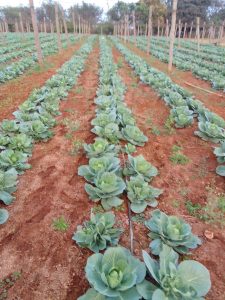
 Almost in the center of the western half of our continent there is a vast area in which very little rain falls. This section includes nearly three hundred million acres of land. It stretches from Canada on the north into Texas on the south, and from the Missouri River (including the Dakotas and western Minnesota) on the east to the Rocky Mountains on the west. In this great area farming has to be done with little water. This sort of farming is therefore called “dry-farming.”
The soil in this section is as a rule very fertile. Therefore the difference between farming in this dry belt and farming in most of the other sections of our country is a difference mainly due to a lack of moisture.
As water is so scarce in this region following things will be considered primarily important:
- to save all the rain as it falls;
- to save all the water after it has fallen. To save the falling rain it is necessary for the ground to be in such a condition that none of the much-needed rain may run off.
- Every drop of rain should go into the effective layers of soil.
- Hence the farmer should never allow his top soil to harden into a crust.
- Such a crust will keep the rain from sinking into the thirsty layers of soil.
- The soil should be deeply plowed; he deeper the soil the more water it can hold; the land should also be kept as porous as possible, for water enters a porous soil freely; for such type of soil ensures normal growth of saplings; for such type of soi ensures movement of friendly insects and worms in top layer of the crop field.
- Porous nature of the top soil can be enhanced by adding humus; as addition of humus the form of vegetable manures will keep the soil in the porous condition needed.[1]
- Enhancement of Water Holding Capacity: After entering the soil it is important to hold water there so that it may ensure supply of the same to growing crops.
- Rapid evaporation of water frm to soil can be avoided by maintaining a llayer of organic litter on ground; as such kind of organic litter also acts as an insulator which prevents radiation of excessive heat deep down inside to layer of soil; optimum temperature, which is ideal for growth of crop, is thus maintained.
- If the land is allowed to remain untilled after a rain or during a hot day, the water in it will evaporate too rapidly and thus the top soil will go dry too rapidly[2].
- Soil should be stirred frequently with a disk or smoothing harrow; it will form a mulch of dry soil on the surface, and this will ensure enhancement of water holding capacity of soil.
- Soil mulch is the only practical application; supplemented with maintenance of an effectic top layer of organic litter; which , in some sort of special cases, may be availed to worms and other insects.
Some experiments in wheat-growing have shown how readily water might be saved if plowing were done at the right time. In addition to a vigilant catching and saving of water, the farmer in these dry climates must give his land the same careful attention that lands in other regions need. The harrow, the cultivator, and the plow should be kept busy. The soil should be kept abundantly supplied with humus.
Just as breeders study what animals are best for their climates, so farmers in the dry belt should study what crops are best suited to their lands. Some crops grow well in dryland[3]; others do not thrive. Experience is the only sure guide to the proper selection. To sum up, then, farmers can grow good crops in these lands only when four things are done:
- the land must be thoroughly tilled so that water can freely enter the soil;
- the land must be frequently cultivated so that the water will be kept in the soil;[4]
- the crops must be properly rotated so as to use to best advantage the food and water supply;
- humus must be freely supplied so as to keep the soil in the best possible condition.
Notes and References
- Dryland agriculture is directy or indirectly linked to effective maintenance of irrigation facilities; and getting adapted to limited source of water.[5]
- Tillage, in some of the selective cases, increases water losses due to evaporation.[6]
- Wider crop spacing, tillt control and better weed control can enhance water banking for individual plant.[7]
- Most of the dry-lands experience winter time rainfall; which can be used to enhance water banking; such banking can be used effectively during dry seasons on the basis of some specifically planned process.[8]
- Areas having summer wet season experience better use of crops, like sorghum sunflower, cotton, etc.[9]
- An effective annual average rainfall of 6 inches may provide a friendy climate for wheat. [10]
- Countries, like Israel, developed a comprehensive maintenance of water to enhance their dry land agriculture; it is als recorded as a strategic shift towards integrated management of irrigation facilities and rain-water harvesting facilities; most of such efforts are state sponsored initiatives.[11]
- Network of state sponsored irrigation facilities is yet t be realised effectively in some of the states; specifically states recorded under the area of dry-land agriculture.[12]
Presented by Chandan Sukumar Sengupta, [senjics@gmail.com]
[1] Corn, for example, does best when it is listed; that is, planted so that it will come up three or four inches beneath the surface. If planted in this way, it roots better, stands up better, and requires less work.
[2] Wheat sowed on land that was plowed as soon as the summer crops were taken off yielded a very much larger return than wheat sowed on land that remained untilled for some time after the summer crops were gathered. This difference in yield on lands of the same fertility was due to the fact that the early plowing enabled the land to take up a sufficient quantity of moisture.
[3] Crops, like the sorghums and Kafir corn, are at comfortable state in scantily watered lands.
[4] The seed-bed should be most carefully prepared. It should be deep, porous, and excellent in tilth. During the growing season all crops should be frequently cultivated.
[5] Kornei, Katherine (9 March 2023). “Dry farming could help agriculture in the western U.S. amid climate change”. Science News. Retrieved 9 October 2024.
[6] “Technology and wheat yields in the semiarid Central Great Plains” (PDF). Archived (PDF) from the original on 2017-02-12.
[7] Garrett, Amy. “Common misconceptions and key points about dry farming: Case study of dry farmer with more than 40 years of experience”. OSU Small Farms. Oregon State University. Archived from the original on 10 May 2016. Retrieved 28 April 2016.
[8] Smith, C. Henry (1981). Smith’s Story of the Mennonites. Revised and expanded by Cornelius Krahn. Newton, Kansas: Faith and Life Press. pp. 263–265. ISBN 0-87303-069-9.
[9] Malcolm, Bill; Sale, Peter”; Egan, Adrian (1996). Agriculture in Australia – An Introduction. Australia: Oxford University Press. ISBN 0-19-553695-9.
[10] Leder, Dave (2019-02-04). “Dryland wheat farmers grow to love no-till method”. Capital Press. Retrieved 2019-12-03.
[11] Leder, Dave (2019-02-04). “Dryland wheat farmers grow to love no-till method”. Capital Press. Retrieved 2019-12-03.
[12] McNeill, John Robert. Something New under the Sun: An Environmental History of the Twentieth-Century World. 1st ed. New York: W.W. Norton & Company, 2000.